
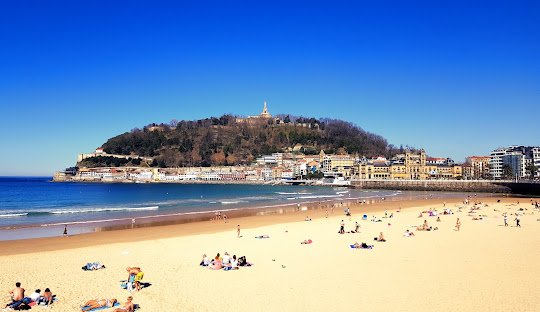
San Sebastián is a resort town on the Bay of Biscay in Spain’s mountainous Basque Country. It’s known for Playa de la Concha and Playa de Ondarreta, beaches framed by a picturesque bayfront promenade. Here’s a real, 2026 deep dive into cannabis culture in San Sebastián —one of the more interesting (and unique) cannabis environments in Europe:
Is THC cannabis legal?
No. Spain has not legalized recreational THC cannabis. The sale of THC cannabis through public shops is illegal. However, Spain has a unique system of private cannabis social clubs, which operate in a legal gray area under specific conditions rather than as licensed retail dispensaries.
Cannabis social clubs
The Basque Country, including San Sebastián, has a long-established cannabis social club culture. These clubs are:
Private, non-profit associations.
Open only to registered members.
Not public shops or dispensaries.
Subject to evolving legal interpretations, and their operation is not explicitly regulated by national law. The Spanish Supreme Court has ruled that municipalities such as San Sebastián cannot independently regulate these clubs because criminal law is a matter for the national government.
CBD shops
San Sebastián has several public CBD stores selling hemp-derived products with little or no THC, including:
LA FAMILIA CBD DONOSTIA
Greenery Tienda CBD Donostia – San Sebastián
OSASUN | Tienda de CBD en Gros – San Sebastian
CBD Kaya Grow & CBD Shop
These businesses sell legal CBD products rather than recreational THC cannabis.
Important to know
❌ There are no legal walk-in THC dispensaries in San Sebastián.
❌ Buying or selling THC cannabis outside the legal framework remains illegal.
❌ Public consumption or possession can lead to administrative penalties.
✅ Private cannabis social clubs exist, but access is limited to members and each club has its own admission policies.
Conclusion:
San Sebastián has a well-established but discreet cannabis culture, centered around private social clubs—not public use or tourism. It’s more organized and regulated than most Spanish cities, but also less accessible and less visible.
I have used Raz( happydankzone@gmail.com ) at least 3-4 times and every time it has been top notch. He is the best local plug you can find around. He is very pleasant, friendly and fast. He is a lifesaver.
He sells top shelf WEED and other stuffs at moderate prices. I will always recommend this guy when people ask me my ” go-to”. All you have to do is follow his instructions.
Just send him an email and I bet you will come back for more once you finish what you bought because the quality is incredible.
You can find him on telegram by clicking: https://t.me/Budsandstoners
Just love this dude Raz. Keep up with the good work. Excellent customer service. He goes above and beyond to make sure the order is right, help and support if anything goes wrong.
It was hard to find a reliable plug but finally Raz showed up and gained my trust. Definitely he is the way out and hands down the best.
Raz ( happydankzone@gmail.com ) is the top service so far. Great service, easy to work with and I’m very satisfied. I’m so happy I found Raz here. He is super responsive, on time and the quality of weed he sells are serious on point and top notch.
I followed his instructions and sincerely I was skeptical at first but he finally showed up on time. I will definitely be ordering from him more often because he is the only reliable local plug you can trust so far